
IIf your trees are starting to look a little overgrown, you may be wondering about the best time to trim trees in St. Louis. The answer depends on the tree, the season, and why it needs trimming
For many trees in St. Louis, late winter is one of the best times for routine trimming.
But that does not mean every tree needs to wait until February.
A broken branch hanging over your driveway is a very different situation from a healthy tree that simply needs a little routine maintenance. The best time to trim really depends on the tree, why it needs trimming, and whether there is a safety concern.
So before you start cutting, here is what St. Louis homeowners should know.
Why Late Winter Is Often a Good Time to Trim Trees
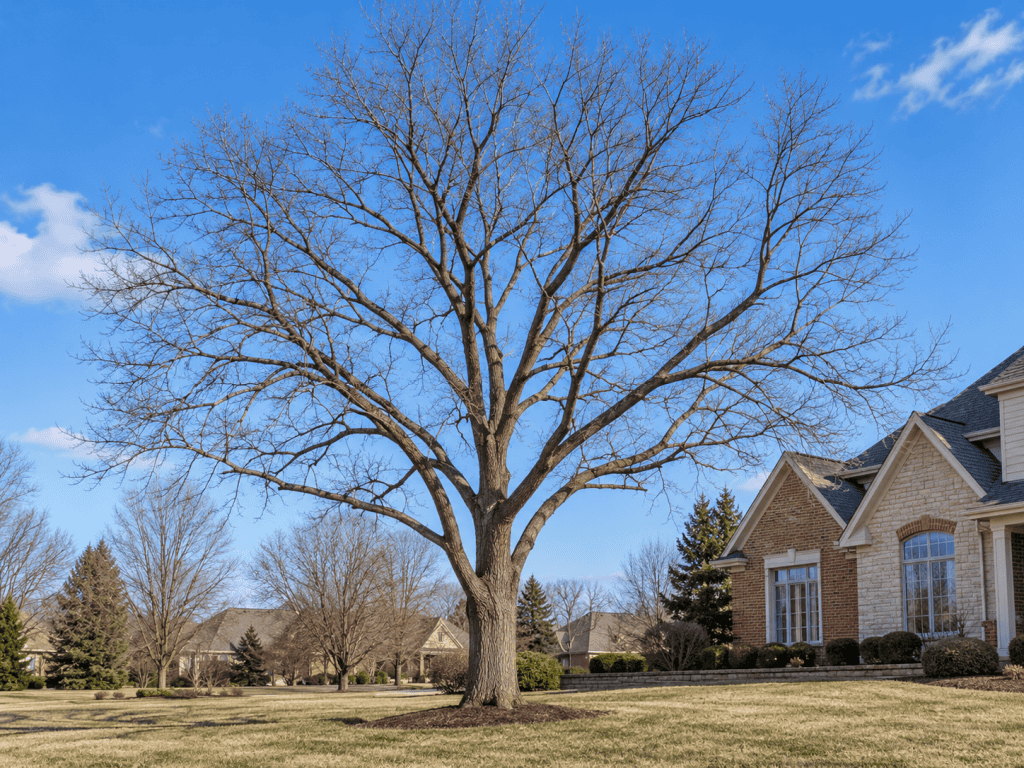
During winter, many deciduous trees are dormant and have dropped their leaves.
That makes it much easier to see what is actually happening inside the canopy.
Branches that were completely hidden by leaves in July suddenly become obvious. You can more easily spot branches that are:
- Dead or damaged
- Crossing or rubbing against each other
- Growing toward the house
- Crowding other branches
- Hanging over a driveway or walkway
- Growing in a way that affects the overall structure of the tree
For many trees, the dormant season is an ideal time for routine pruning. University of Missouri Extension recommends dormant-season pruning in general, with major pruning often best done in February or March.
There is also something homeowners appreciate about winter tree work.
Without all the leaves in the way, it is much easier to understand why a particular branch needs to come off.
Does That Mean You Should Only Trim Trees in Winter?
No.
There are plenty of situations where waiting for the “perfect” season does not make sense.
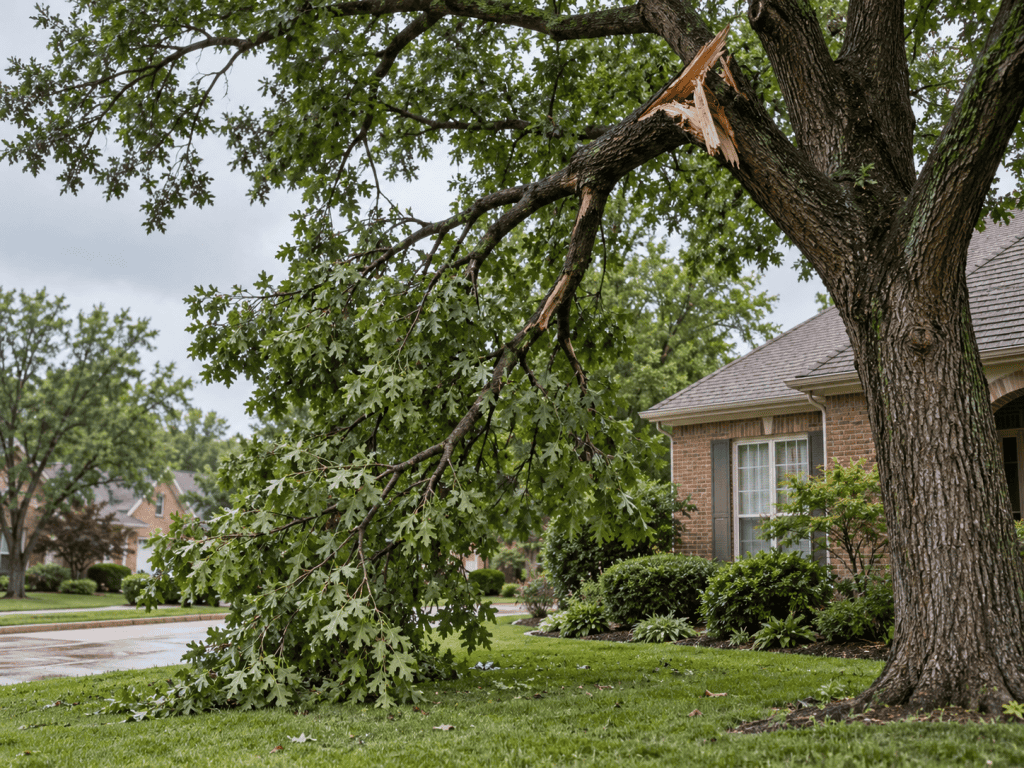
If a branch is broken, hanging over your driveway, resting on your roof, or showing signs that it could fall, it should be evaluated when you notice the problem.
Safety issues should be handled when they happen.
The same goes for storm damage.
St. Louis weather can leave trees with cracked, hanging, or partially broken limbs. A branch that has already been damaged does not become safer simply because it is July instead of January.
Dead, damaged, and hazardous branches can often be addressed when needed. MU Extension also notes that minor corrective pruning can be performed throughout the year.
If You Have Oak Trees, Timing Matters Even More
This is especially important for St. Louis homeowners with oak trees.
Missouri has oak wilt, a serious disease that can spread to healthy oak trees through fresh wounds.
Beetles that can carry the disease are attracted to those wounds during the warmer months. Because of that, winter is considered the safest time for routine oak pruning.
University of Missouri Extension identifies mid-March through mid-July as the high-risk period for oak wilt transmission, while the Missouri Botanical Garden recommends pruning oaks during winter and completing routine pruning before mid-March when possible.
So if you have a healthy oak that simply needs routine trimming, winter is a great time to get it done.
A storm-damaged or dangerous oak branch is different. Immediate safety concerns may still need to be addressed regardless of the season.
The important thing is knowing the difference between routine pruning that can wait and a hazardous branch that cannot.
What About Tree Trimming in Spring?
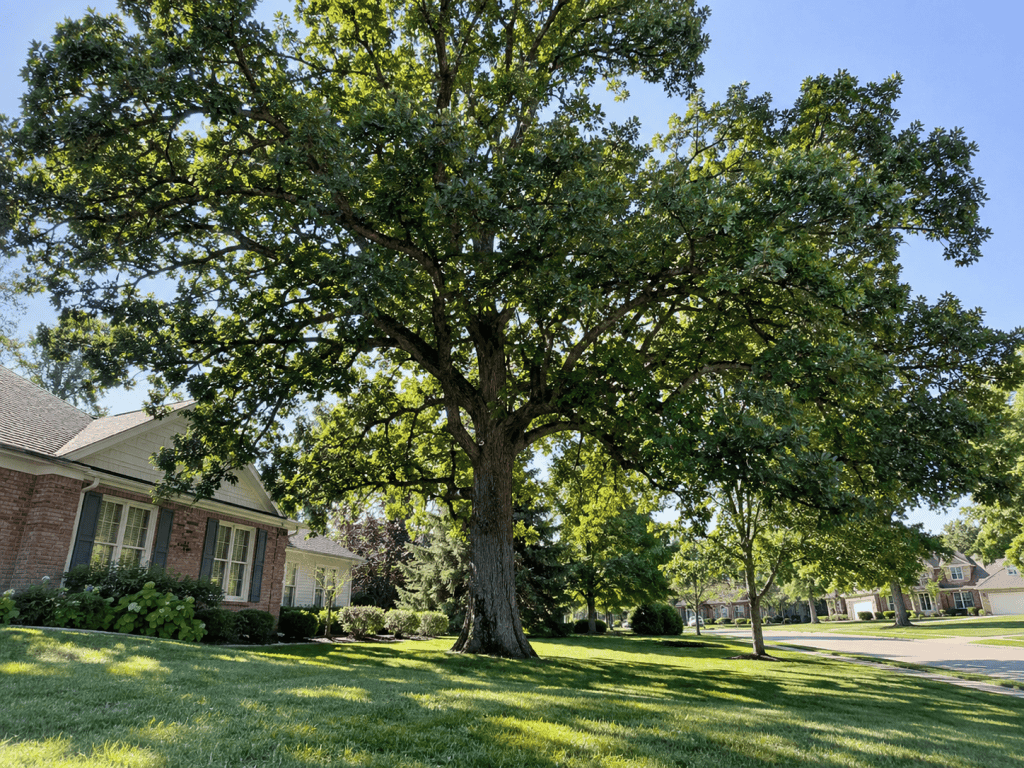
Spring is when everything starts waking back up.
The grass is growing, flowers are coming back, and suddenly everyone starts noticing the yard again.
It can make spring feel like the obvious time to start trimming everything.
But major pruning is not always necessary just because spring has arrived.
Trees are putting energy into producing leaves, flowers, and new growth, and different types of trees can have very different pruning needs.
Flowering trees are a good example.
Some trees produce their flowers on growth from the previous year. If you trim them at the wrong time, you may accidentally remove many of the flower buds you were hoping to see.
If your goal is shaping a flowering tree or encouraging blooms, it helps to know what kind of tree you have before making major cuts.
Can Trees Be Trimmed in Summer?
Yes, especially when there is a specific reason.
Summer trimming may make sense when you need to remove:
- Dead branches
- Broken limbs
- Storm-damaged branches
- Limbs growing into structures
- Branches blocking visibility
- Growth creating an immediate safety concern
Summer also makes one thing very easy to see.
A branch that is not producing leaves.
If the entire tree is green and full but one large branch is completely bare, it deserves a closer look.
That does not necessarily mean the whole tree is unhealthy. Sometimes one branch has died while the rest of the tree remains perfectly viable.
For routine trimming, however, there is usually no reason to aggressively thin a healthy tree in the middle of the growing season.
What About Fall?
Fall feels like tree-trimming season.
The leaves are dropping. Everyone is cleaning up the yard. You are already outside with rakes, blowers, and bags.
But fall is generally not the time for major, unnecessary pruning.
Trees are transitioning into dormancy, and if there is no immediate safety concern, waiting until the dormant season may make more sense.
That does not mean you should ignore a broken or dangerous branch because it happens to be October.
If something is hanging over your roof, cracked after a storm, or clearly dead, address the problem.
The key word is purpose.
Do not heavily trim a healthy tree simply because you are already doing fall yard work.
How Do I Know If My Tree Actually Needs Trimming?
You do not have to trim a tree just because it has been a year or two since someone touched it.
Good trimming should have a reason.
Your tree may benefit from trimming if you notice:
- Dead or broken branches
- Limbs rubbing against each other
- Heavy branches extending over the roof
- Branches blocking a driveway or walkway
- Growth getting too close to the house
- Storm-damaged limbs
- Branches hanging over areas where people regularly walk or park
- Parts of the canopy that are especially crowded
Sometimes tree trimming is about appearance.
More often, it is about structure, safety, clearance, and helping the tree continue growing properly.
Can Tree Trimming Help Protect My Home?
Absolutely.
Take a look at the trees around your house and ask yourself a simple question:
What would those branches hit if one came down?
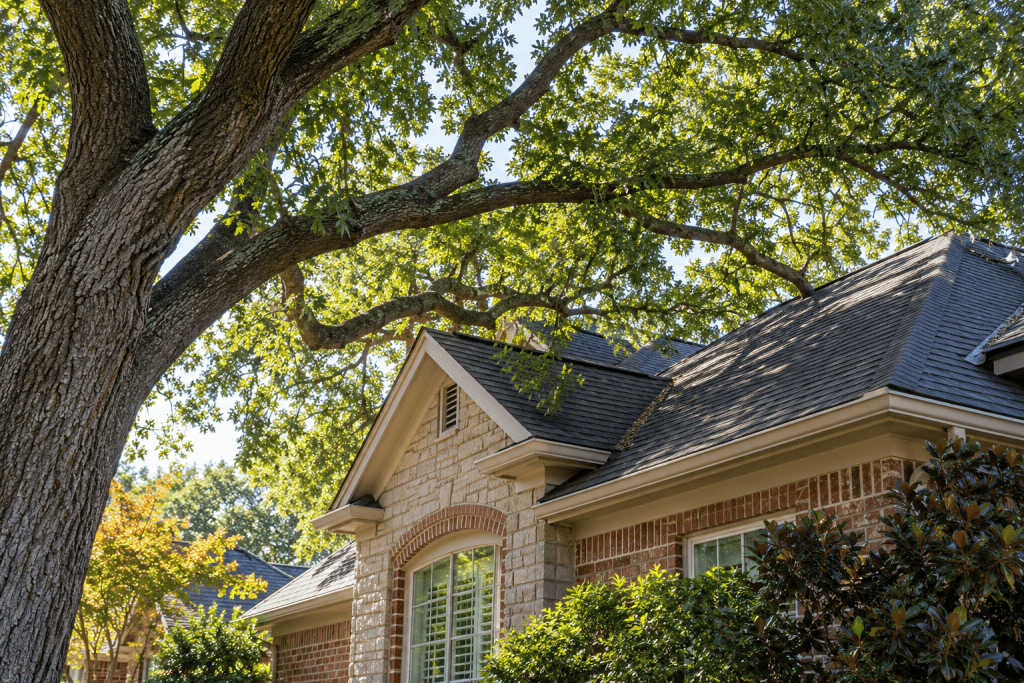
Branches hanging directly over a roof, gutter, driveway, vehicle, fence, or patio can become a much bigger concern during strong wind or a storm.
Tree limbs can also rub against siding, roofing, gutters, and windows.
That does not mean every branch anywhere near your house should be cut off.
The goal is to create appropriate clearance while preserving the health and natural shape of the tree.
Sometimes that means removing only a few carefully selected branches.
Can You Trim Too Much Off a Tree?
Yes.
More trimming is not automatically better trimming.
Removing too much of the canopy at once can put unnecessary stress on a tree and affect how it grows afterward.
One of the biggest mistakes homeowners can make is assuming that drastically cutting back a large tree will automatically make it safer.
Poor trimming can create an entirely new set of problems.
Professional tree trimming should be intentional.
Remove what needs to come off and preserve healthy growth wherever possible.
What Is Tree Topping?
Tree topping is the aggressive removal of large portions of the upper canopy, often leaving large stubs behind.
You have probably seen a tree that has been cut this way.
It may seem like a quick solution for a tree that has gotten too tall, but topping can damage the tree and encourage fast-growing shoots around the cuts.
Those new shoots may not be attached as strongly as the original branches.
Instead of permanently solving the problem, improper topping can lead to more maintenance and potential structural issues later.
Good tree trimming works with the natural structure of the tree rather than simply chopping the top off.
What If My Tree Is Growing Too Close to the House?
This is one of the most common reasons homeowners start thinking about tree trimming.
Maybe branches are touching the roof.
Maybe they are brushing against an upstairs window.
Or maybe every time the wind picks up, you can hear branches scraping against the house.
Sometimes the solution is fairly simple.
A few carefully selected branches may provide the clearance you need without dramatically changing the tree.
Other times, the tree may be growing in a location that is creating an ongoing problem.
That is when it makes sense to look at the whole situation rather than simply cutting whichever branch happens to be closest to the house.
If you are wondering whether your tree has reached the point where trimming is no longer enough or whether tree removal may be the safer option…our guide on 7 Signs Your Tree May Need to Be Removed can help you understand what to look for.
Should I Trim Large Trees Myself?
There is a big difference between clipping a small branch you can comfortably reach from the ground and trying to remove a large limb 20 feet above your driveway.
Once the job involves ladders, chainsaws, large limbs, power lines, structures, or branches that are too heavy to control, the risk goes up quickly.
Large tree limbs can weigh far more than they appear to from the ground.
There is also the question of what happens after you make the cut.
Where is the branch going?
What is underneath it?
Is the branch under tension?
Could removing it change the balance of another limb?
If you are unsure, especially when dealing with a large mature tree, having a professional take a look is usually the safer choice.
The Best Time to Trim Depends on the Tree
There is a reason you will hear different answers when you ask when trees should be trimmed.
Different trees have different needs.
The species, age, condition, location, and reason for trimming all matter.
For many St. Louis trees, dormant-season trimming is an excellent option for routine maintenance.
For oak trees, winter timing is especially important because of the risk of oak wilt.
And if you have a damaged branch hanging over your driveway today, you do not need to wait until February just because winter is considered the ideal trimming season.
The most important question is not simply, “What month is it?”
It is:
Why does this tree need to be trimmed?
Complete Tree Service of St. Louis provides professional tree trimming throughout St. Louis and the surrounding communities. We can take a look at your trees, identify what actually needs attention, and help you decide whether trimming should happen now or can wait until the right season.
Not sure whether your trees are due for trimming? Request a free estimate and we’ll take a look.