
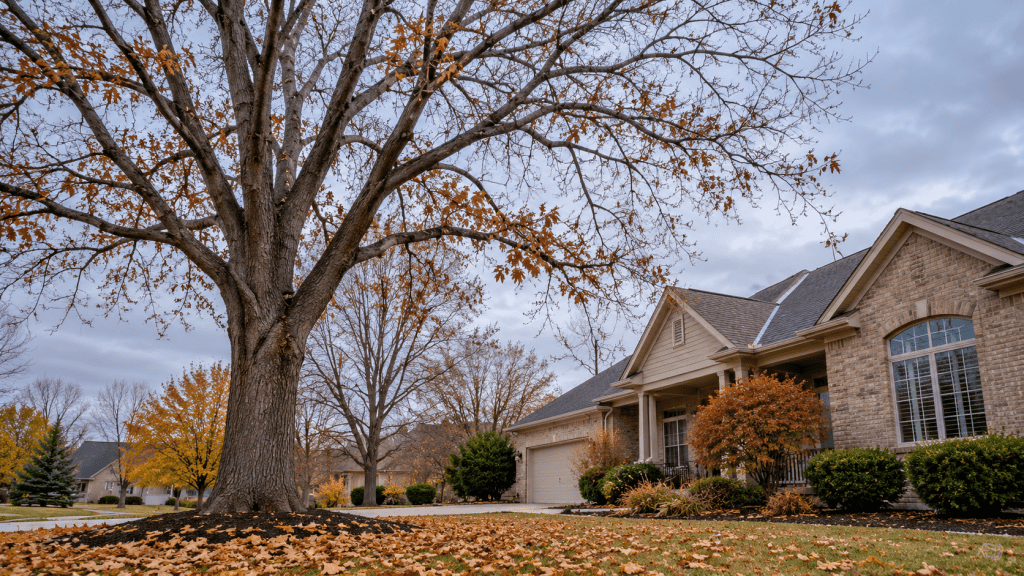
The leaves are coming down, temperatures are dropping, and pretty soon most of us are going to stop paying much attention to the trees in the yard until spring.
But before winter settles into St. Louis, this is actually a really good time to look up.
A branch that seems fine on a calm October afternoon can become a much bigger problem once winter wind, ice, or heavy snow gets involved.
The good news is that you do not need to be a tree expert to spot some of the more obvious warning signs.
Here are seven things worth checking before winter really sets in.
1. Look for Dead or Broken Branches
Start with the easiest thing to spot.
Do you see branches with no leaves while the rest of the tree still has foliage?
Are there limbs that look cracked, broken, or partly detached?
Dead and damaged branches are more likely to fail when they are put under additional stress from wind, snow, or ice.
That does not mean every dead branch is an emergency, but it does mean it is worth paying attention to where that branch is located.
A dead limb hanging over the back corner of your yard is one thing.
A dead limb hanging over your driveway, roof, sidewalk, or the place your kids play is something else entirely.
If a branch already looks questionable now, winter weather may put even more stress on it.
2. Check for Branches Hanging Over Your Roof
Large branches hanging directly over your home are worth taking a closer look at before winter.
Even healthy branches can become a problem if they are already rubbing against the roof, touching gutters, or hanging low over the house.
Add wind, ice, or heavy snow and that weight can put even more pressure on the limb.
Look for branches that:
- Are resting on or touching the roof
- Hang directly over your driveway or parked vehicles
- Have cracks where they connect to the trunk
- Rub against the house when the wind blows
- Are already sagging lower than they used to
You do not necessarily need to remove every branch near your house.
In many cases, selective trimming can create needed clearance while preserving the health and structure of the tree.
3. Look for Cracks in the Trunk or Large Limbs
A visible crack in a tree is something you should not ignore.
Pay special attention to the areas where large branches connect to the trunk.
If you notice a deep split, a section pulling apart, or a crack that seems to have grown since the last time you looked, it is worth having the tree evaluated.
Some cracks are more serious than others, and it can be difficult to judge the depth or severity from the ground.
This is especially important with mature trees.
A large branch does not have to fall very far to cause significant damage.
4. Take a Look at the Tree’s Lean
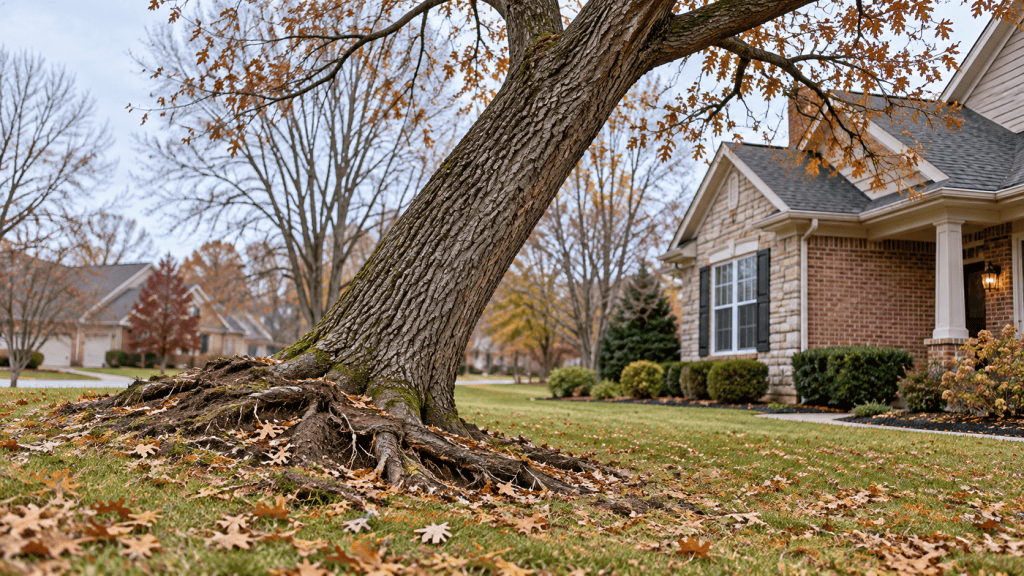
Some trees naturally grow at an angle and have been doing so for decades.
That is very different from a tree that has suddenly started leaning.
If you feel like a tree looks different than it did last year, trust that instinct and take another look.
Check the ground around the base of the tree too.
Do you see soil lifting on one side?
Are roots suddenly more exposed?
Is there a gap forming between the trunk and the surrounding soil?
Those changes may indicate movement in the root system.
A tree with a changing lean deserves attention before winter weather adds more stress.
5. Check for Damage Left Behind From Previous Storms
St. Louis storms can leave behind damage that is easy to forget once the yard is cleaned up.
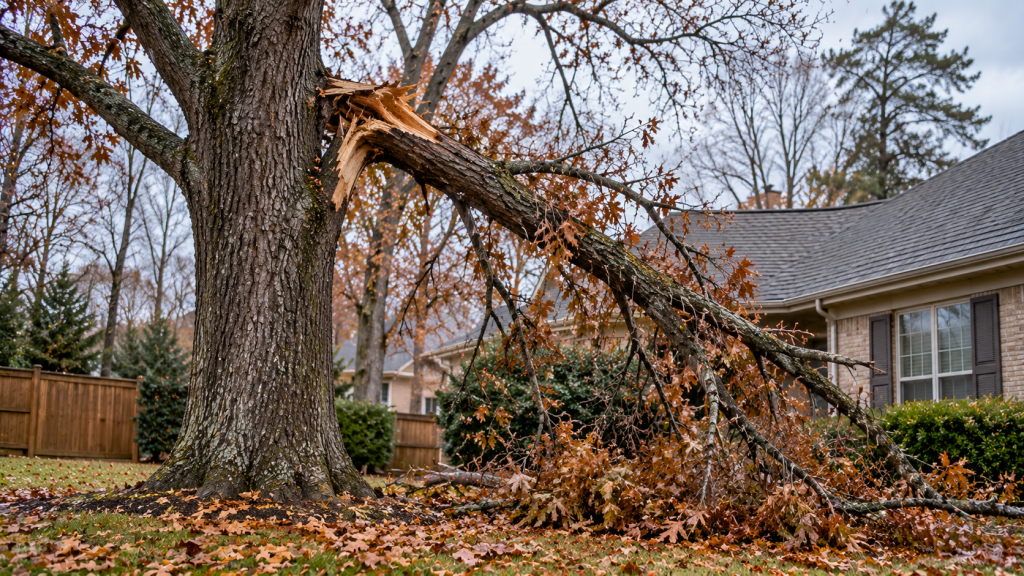
A branch may have cracked during a summer storm but never completely fallen.
Another limb may have split and continued hanging in the canopy.
By fall, you may barely notice it anymore.
Now is a good time to walk around the property and look for anything that never quite recovered after earlier storms.
Look for broken branch ends, hanging limbs, torn bark, or sections of the tree that seem thinner than the rest.
Old storm damage can become new winter damage if weakened areas are left in place.
6. Pay Attention to What Is Happening at the Base of the Tree
It is easy to spend all your time looking at the branches and forget about the bottom of the tree.
Take a look around the trunk and roots.
Do you see large roots that are damaged or exposed?
Is there decay around the base?
Are there mushrooms or fungal growth coming directly from the trunk or major roots?
Has landscaping, construction, or digging changed the area around the tree this year?
The root system is what keeps the tree standing.
If something is happening below the surface, the canopy may still look perfectly normal for a while.
Fungal growth does not always mean a tree is unsafe, but growth directly from the trunk or major roots is worth having evaluated.
That is why changes around the base of the tree are worth paying attention to, especially before a season of stronger weather.
7. Look at What Could Be Damaged If Something Falls
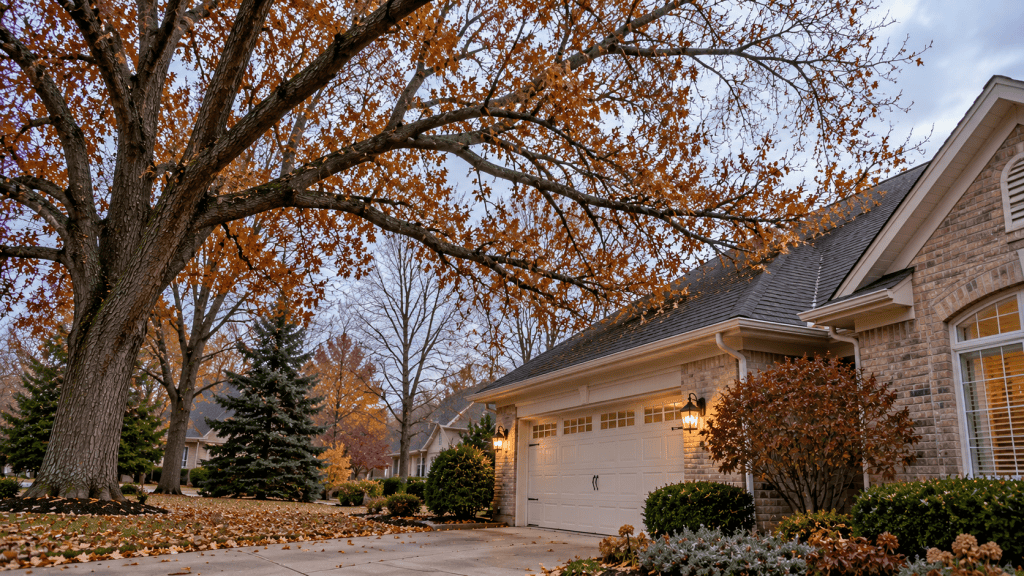
This last one is less about the tree and more about what is around it.
Stand back and look at the whole property.
If a large branch came down, where would it land?
Your roof?
A neighbor’s fence?
The driveway?
A vehicle?
The kids’ playset?
Power lines?
Sometimes a tree does not look especially concerning until you consider what is underneath it.
Location changes the level of risk.
A questionable branch over an empty corner of the yard gives you more room to monitor the situation.
A questionable branch directly over your bedroom deserves a different level of attention.
Should You Trim Trees Before Winter?
Sometimes, yes.
Fall and winter can be a good time to address dead, broken, or hazardous branches.
For many trees, routine trimming is also commonly done during the dormant season when the leaves are gone and the structure of the tree is easier to see.
But the goal should not be to start cutting branches simply because winter is coming.
Good trimming should have a reason.
If a branch is healthy, well positioned, and not creating a problem, it may not need to be touched at all.
If you are wondering about timing, our guide on when to trim trees in St. Louis explains when seasonal trimming makes the most sense.
What About a Tree That Already Looks Unhealthy?
If the tree has large dead limbs, significant trunk damage, a changing lean, major root issues, or several warning signs happening at once, trimming may not be enough.
That does not automatically mean the tree needs to come down.
It does mean it is worth finding out what is going on before winter weather puts additional stress on it.
If you are not sure where that line is, our guide on 7 signs your tree may need to be removed is a good place to start.
Is Winter a Bad Time for Tree Work?
Not necessarily.
In fact, winter can be a practical time for certain types of tree work.
Once leaves are gone, the structure of a tree is easier to see, and dormant-season trimming can make sense for many species.
Winter tree removal may also be easier in some situations because lawns, gardens, and landscaping are not actively growing.
At Complete Tree Service, we also use specialized equipment such as our tracked spider lift when access is limited. Its compact design allows us to reach trees in many residential yards while minimizing disruption to lawns and surrounding landscaping.
Every property is different, which is why the best approach depends on the tree, where it is located, and what needs to be done.
Do Not Wait for a Storm to Tell You There Is a Problem
Most homeowners are not walking around their yard inspecting trees every weekend.
And you do not need to.
But fall is a good time to take five minutes and look around before winter arrives.
If something suddenly looks different, a branch is hanging where it should not be, or you notice damage you had not seen before, it is better to ask about it now than after a storm.
Sometimes the answer is simple trimming.
Sometimes the tree is perfectly fine.
And sometimes catching a problem early can prevent a much bigger headache later.
Complete Tree Service of St. Louis provides professional tree trimming, tree removal, and storm damage services throughout St. Louis and the surrounding communities.
Not sure whether a tree on your property is ready for winter? Request a free estimate today. We’ll take a look, explain what we’re seeing, and help you determine whether anything needs to be addressed before winter weather arrives.